
When There Is No Depth of Soil
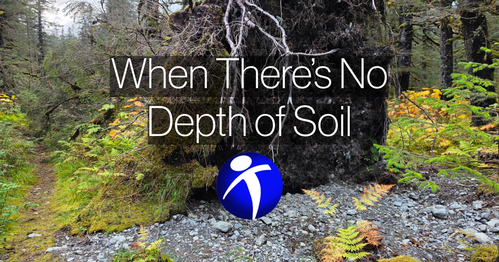
I love hiking in glacial valleys. While I don’t believe in the timelines and explanations proposed by old earth evolutionists, I tend to believe that glaciers had something to do with the formation of these valleys. Perhaps, phenomena related to the Noahic flood created massive glaciers which in turn helped to shape these valleys. However they came to be, these valleys feature beautiful bottomlands, often containing lakes or rivers, surrounded by steep, impressive mountains that stand in stark contrast to the valleys themselves. These valleys are some of the more awe-inspiring places on God’s green earth.
Fed by melting glaciers, these valleys are often verdant and full of plant life, which adds to their beauty. However, because the glacial silt in these valleys is often incredibly rocky, this life often clings to a relatively thin layer of soil. Depending on what seeds find their way to these valleys, sometimes plants grow which the thin soil simply can’t bear. It’s not uncommon to see a mighty forest with several fallen trees which betray weak, shallow roots that evidently failed to penetrate the rocky soil in which the trees had formerly been planted.
The Gospel accounts contain three records of Jesus speaking about seed that “fell on rocky ground” (Matthew 13:5; Mark 4:5; cf. Luke 8:6). While two of these accounts provide clear details that indicate that they were spoken on the same occasion as each other (Matthew 13:1-2; Mark 4:1), Luke doesn’t provide the same details; it’s possible he records a similar teaching given on another occasion. This might explain the difference in Jesus’ stated issue with the rocky soil. Matthew and Mark record that “rocky ground” has “no depth of soil” (Matthew 13:5; Mark 4:5), while Luke records that the seed that “fell on the rock… had no moisture” (Luke 8:6).
For those who might not be familiar with this account (and who might be wondering why a religious teacher like Jesus is talking about seed and soil at all), Jesus used the farming methods of His day to call His audience to think about their hearts as they received His teaching. In Jesus’ day, sowers (as they were called) would plant crops by scattering seed across the ground (Matthew 13:3; Mark 4:3; Luke 8:5). Jesus compared the sower’s seed to “the word of God,” which His audience’s hearts could receive like soil receives seed, if they would let them (Luke 8:11, 15; cf. Matthew 13:19; Mark 4:14, 20). However, without some effort on their part, their hearts might prove not to be receptive but instead to be compacted by the traffic of the world (like wayside soil), crowded and choked with other concerns (like thorny soil), or kept cursory in their cultivation (like rocky soil). Jesus spoke somewhat cryptically about sowers and soils to encourage investigation; the disciples who bothered to ask what He meant demonstrated that they were fit “to know the mysteries of the kingdom of heaven” and thus were good soil (Matthew 13:11; cf. Mark 4:11; Luke 8:10).
Because Jesus’ illustration drew from His audience’s experiences rather than mine, it’s pretty clear that His words about rocky soil weren’t meant to draw people’s minds to glacial valleys but to the rocky soil of Galilee. And, to return to the thought above, it’s possible that Luke does in fact record the same event as Matthew and Mark and that the Holy Spirit simply guided the authors to include or omit one detail or another. Still, the fact that Jesus describes two issues with such soil – “no depth of soil” and “no moisture” – allows me to make a point of comparison. The glacial valleys I’ve hiked in have plenty of moisture but, like the soil Jesus spoke of, afford plants no chance at depth.
Farming metaphors run through the Bible. Paul envisioned the church at Corinth as “God’s field” (1 Corinthians 3:9). The seed had already been sown in Corinth, for Paul said, “I planted, Apollos watered, but God gave the increase” (1 Corinthians 3:6). Through both the farming efforts of Paul and Apollos and the life-giving work of God Himself, green Christian shoots had sprouted in this field. Like glacial valleys, water was no issue in Corinth, but depth clearly was. Paul laments, “I, brethren, could not speak to you as to spiritual people but as to carnal, as to babes in Christ” (1 Corinthians 3:1).
There are certainly hearts out there that need more watering. The Hebrews author encourages us, “And let us consider one another in order to stir up love and good works, not forsaking the assembling of ourselves together, as is the manner of some, but exhorting one another” (Hebrews 10:24-25). While I’m convinced that the focus of the Hebrews author is not a tick-box mentality towards attendance, prioritizing and then utilizing Christian assemblies is an important habit that some just don’t have. God envisioned the church in prophecy as a place where, “the Word of the Lord” would “go forth,” allowing people to be taught “His ways” (Isaiah 2:3). Sadly, some don’t attend regularly while others attend but do so with hearts more akin to the hardened wayside soil than the good soil Jesus desires, showing up but tuning out. So yes, some Christians are withering on the vine (cf. John 15:1-8) because they willfully find “no moisture” (Luke 8:6), choosing to remain as rocky soil.
For the most part though, churches tend to be well-watered places – just like glacial valleys. This brings the second danger of rocky soil to mind though: “depth of soil” (Matthew 13:5). Some Christians are more focused on upward growth than they are on downward growth. They want to appear to be towering trees of Christianity, doing what they do “to be seen by men” (Matthew 23:5). They take advantage of the well-watered nature of their church-valley home to promote their upward growth, but they don’t grow deep in personal understanding or in communion with God. When the storms of life come as they inevitably do, the weight of their upward growth becomes a liability because of their lack of downward growth, and, like the tall trees in those glacial valleys, “great” is their “fall” (Matthew 7:27).
There is no fast track to sustainable Christian growth. As always, “patient continuance in doing good” is the order of the day (Romans 2:7). Jesus’ description of the good soil is worth remembering: “But the ones that fell on the good ground are those who, having heard the word with a noble and good heart, keep it and bear fruit with patience” (Luke 8:15). So ask yourself as I ask myself: “Do I hear with a noble and a good heart, receiving God’s Word and His watering? And am I trying to grow upward too quickly, without letting the Word become deeply embedded in my heart?” May we strive to be good soil and not rocky soil.
Fed by melting glaciers, these valleys are often verdant and full of plant life, which adds to their beauty. However, because the glacial silt in these valleys is often incredibly rocky, this life often clings to a relatively thin layer of soil. Depending on what seeds find their way to these valleys, sometimes plants grow which the thin soil simply can’t bear. It’s not uncommon to see a mighty forest with several fallen trees which betray weak, shallow roots that evidently failed to penetrate the rocky soil in which the trees had formerly been planted.
The Gospel accounts contain three records of Jesus speaking about seed that “fell on rocky ground” (Matthew 13:5; Mark 4:5; cf. Luke 8:6). While two of these accounts provide clear details that indicate that they were spoken on the same occasion as each other (Matthew 13:1-2; Mark 4:1), Luke doesn’t provide the same details; it’s possible he records a similar teaching given on another occasion. This might explain the difference in Jesus’ stated issue with the rocky soil. Matthew and Mark record that “rocky ground” has “no depth of soil” (Matthew 13:5; Mark 4:5), while Luke records that the seed that “fell on the rock… had no moisture” (Luke 8:6).
For those who might not be familiar with this account (and who might be wondering why a religious teacher like Jesus is talking about seed and soil at all), Jesus used the farming methods of His day to call His audience to think about their hearts as they received His teaching. In Jesus’ day, sowers (as they were called) would plant crops by scattering seed across the ground (Matthew 13:3; Mark 4:3; Luke 8:5). Jesus compared the sower’s seed to “the word of God,” which His audience’s hearts could receive like soil receives seed, if they would let them (Luke 8:11, 15; cf. Matthew 13:19; Mark 4:14, 20). However, without some effort on their part, their hearts might prove not to be receptive but instead to be compacted by the traffic of the world (like wayside soil), crowded and choked with other concerns (like thorny soil), or kept cursory in their cultivation (like rocky soil). Jesus spoke somewhat cryptically about sowers and soils to encourage investigation; the disciples who bothered to ask what He meant demonstrated that they were fit “to know the mysteries of the kingdom of heaven” and thus were good soil (Matthew 13:11; cf. Mark 4:11; Luke 8:10).
Because Jesus’ illustration drew from His audience’s experiences rather than mine, it’s pretty clear that His words about rocky soil weren’t meant to draw people’s minds to glacial valleys but to the rocky soil of Galilee. And, to return to the thought above, it’s possible that Luke does in fact record the same event as Matthew and Mark and that the Holy Spirit simply guided the authors to include or omit one detail or another. Still, the fact that Jesus describes two issues with such soil – “no depth of soil” and “no moisture” – allows me to make a point of comparison. The glacial valleys I’ve hiked in have plenty of moisture but, like the soil Jesus spoke of, afford plants no chance at depth.
Farming metaphors run through the Bible. Paul envisioned the church at Corinth as “God’s field” (1 Corinthians 3:9). The seed had already been sown in Corinth, for Paul said, “I planted, Apollos watered, but God gave the increase” (1 Corinthians 3:6). Through both the farming efforts of Paul and Apollos and the life-giving work of God Himself, green Christian shoots had sprouted in this field. Like glacial valleys, water was no issue in Corinth, but depth clearly was. Paul laments, “I, brethren, could not speak to you as to spiritual people but as to carnal, as to babes in Christ” (1 Corinthians 3:1).
There are certainly hearts out there that need more watering. The Hebrews author encourages us, “And let us consider one another in order to stir up love and good works, not forsaking the assembling of ourselves together, as is the manner of some, but exhorting one another” (Hebrews 10:24-25). While I’m convinced that the focus of the Hebrews author is not a tick-box mentality towards attendance, prioritizing and then utilizing Christian assemblies is an important habit that some just don’t have. God envisioned the church in prophecy as a place where, “the Word of the Lord” would “go forth,” allowing people to be taught “His ways” (Isaiah 2:3). Sadly, some don’t attend regularly while others attend but do so with hearts more akin to the hardened wayside soil than the good soil Jesus desires, showing up but tuning out. So yes, some Christians are withering on the vine (cf. John 15:1-8) because they willfully find “no moisture” (Luke 8:6), choosing to remain as rocky soil.
For the most part though, churches tend to be well-watered places – just like glacial valleys. This brings the second danger of rocky soil to mind though: “depth of soil” (Matthew 13:5). Some Christians are more focused on upward growth than they are on downward growth. They want to appear to be towering trees of Christianity, doing what they do “to be seen by men” (Matthew 23:5). They take advantage of the well-watered nature of their church-valley home to promote their upward growth, but they don’t grow deep in personal understanding or in communion with God. When the storms of life come as they inevitably do, the weight of their upward growth becomes a liability because of their lack of downward growth, and, like the tall trees in those glacial valleys, “great” is their “fall” (Matthew 7:27).
There is no fast track to sustainable Christian growth. As always, “patient continuance in doing good” is the order of the day (Romans 2:7). Jesus’ description of the good soil is worth remembering: “But the ones that fell on the good ground are those who, having heard the word with a noble and good heart, keep it and bear fruit with patience” (Luke 8:15). So ask yourself as I ask myself: “Do I hear with a noble and a good heart, receiving God’s Word and His watering? And am I trying to grow upward too quickly, without letting the Word become deeply embedded in my heart?” May we strive to be good soil and not rocky soil.
-Patrick Swayne
patrick@tftw.org
patrick@tftw.org
Posted in Bible Study
Posted in Parable of the Soils, Parable of the Sower, Seed, Word of God, Rocky Soil, Matthew 13, Mark 4, Luke 8
Posted in Parable of the Soils, Parable of the Sower, Seed, Word of God, Rocky Soil, Matthew 13, Mark 4, Luke 8
Recent
Archive
2026
January
February
March
April
May
June
July
2025
January
March
April
May
June
July
September
October
November
2024
January
February
March
May