
The Difference Between God's Highway and Ours
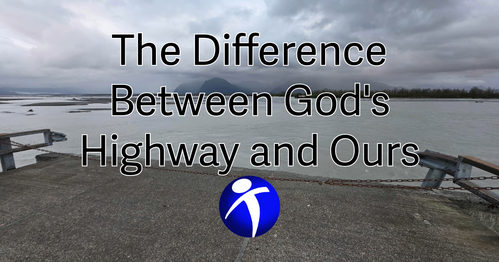
My family and I recently had the opportunity to go to Cordova, Alaska. We truly enjoyed exploring the beauty of God’s creation there and are very glad we went. At the same time, we weren’t able to see the thing that made us think of going to Cordova in the first place. There’s a relic associated with the Kennecott Copper Mine story (a story that wrote its final chapters nearly a century ago) called Miles Glacier Bridge, or, more frequently, the Million-Dollar Bridge. Completed in 1910, this bridge cost an incredible amount of money for the time: 1.4 million dollars, over 49 million dollars in today’s currency. It’s apparently quite a spectacle, spanning the Copper River at the base of the Childs Glacier. What we didn’t realize until we arrived was that the bridge is currently inaccessible due to the washout of another bridge before it on the Copper River Highway that happened several years ago.
Being the completist that I am, I still wanted to go as far as I could down the Copper River Highway. This brought me to a bridge that extends halfway across the river only to come to an abrupt and dramatic stop. As I looked down from the bridge’s broken edge, the powerful surge of the Copper River did not leave me guessing as to what happened to the rest of the bridge.
America is a nation that profits greatly from a cultural desire to build and maintain roads. There are so many places that are accessible via our nation’s network of roads. Rather than be grateful, we typically take these roads for granted. We complain about traffic, potholes, construction work, and road closures; we expect to be able to get where we want to go and for there to be no barriers, at least no insurmountable ones. Even I had to check the desire in myself to say, “There is a road. It should be open!” with the reality that even when it was there, the Copper River Highway really went nowhere. No towns or communities that I’m aware of were cut off when the bridge collapsed at mile 36; it just became harder to go see what was on the other side of the river.
I got to thinking about that dead end road as I was reading the book of Isaiah the other day. The tendency to desire an unobstructed path is not a uniquely American trait. Isaiah described his people, saying:
For starters, the highways that man builds always wind up broken and always wind up at truly dead ends. Proverbs records not once but twice, “There is a way that seems right to a man, But its end is the way of death” (Proverbs 14:12; 16:25). It’s definitely not good for us to always go our own way and never be hindered or redirected.
The truth that brought to my mind the comparison between our highways and God’s comes from Isaiah 35, where Isaiah describes a highway that God was going to build:
And Christians, God did create that highway. Jesus said, “I am the way, the truth, and the life” (John 14:6). So the next time you feel frustrated about not being able to get where you want to go, stop and think, “Where does God want me to go?”
I promise, His highway is better than yours.
Being the completist that I am, I still wanted to go as far as I could down the Copper River Highway. This brought me to a bridge that extends halfway across the river only to come to an abrupt and dramatic stop. As I looked down from the bridge’s broken edge, the powerful surge of the Copper River did not leave me guessing as to what happened to the rest of the bridge.
America is a nation that profits greatly from a cultural desire to build and maintain roads. There are so many places that are accessible via our nation’s network of roads. Rather than be grateful, we typically take these roads for granted. We complain about traffic, potholes, construction work, and road closures; we expect to be able to get where we want to go and for there to be no barriers, at least no insurmountable ones. Even I had to check the desire in myself to say, “There is a road. It should be open!” with the reality that even when it was there, the Copper River Highway really went nowhere. No towns or communities that I’m aware of were cut off when the bridge collapsed at mile 36; it just became harder to go see what was on the other side of the river.
I got to thinking about that dead end road as I was reading the book of Isaiah the other day. The tendency to desire an unobstructed path is not a uniquely American trait. Isaiah described his people, saying:
“…this is a rebellious people, lying children, children who will not hear the law of the LORD; who say to the seers, "Do not see," and to the prophets, "Do not prophesy to us right things; Speak to us smooth things, prophesy deceits. Get out of the way, turn aside from the path, cause the Holy One of Israel to cease from before us’” (Isaiah 30:9-11).
Israel saw God and His prophets as obstacles keeping them from where they wanted to go. Really, nothing could be further from the truth.For starters, the highways that man builds always wind up broken and always wind up at truly dead ends. Proverbs records not once but twice, “There is a way that seems right to a man, But its end is the way of death” (Proverbs 14:12; 16:25). It’s definitely not good for us to always go our own way and never be hindered or redirected.
The truth that brought to my mind the comparison between our highways and God’s comes from Isaiah 35, where Isaiah describes a highway that God was going to build:
“A highway shall be there, and a road, and it shall be called the Highway of Holiness. The unclean shall not pass over it, but it shall be for others. Whoever walks the road, although a fool, shall not go astray. No lion shall be there, nor shall any ravenous beast go up on it; it shall not be found there. But the redeemed shall walk there, and the ransomed of the LORD shall return, and come to Zion with singing, with everlasting joy on their heads. They shall obtain joy and gladness, and sorrow and sighing shall flee away” (Isaiah 35:8-10).
What a beautiful picture. What a beautiful prospect! God’s highway differs from ours in every way. Only God can decree, “A highway shall be there,” and it certainly will be, come hell or high water (in fact, He’s the only one for whom that statement really applies). Only God could establish a “Highway of Holiness,” dictating who could and who could not “pass over it.” Only God could create a road with 100% guaranteed, “everlasting joy.”And Christians, God did create that highway. Jesus said, “I am the way, the truth, and the life” (John 14:6). So the next time you feel frustrated about not being able to get where you want to go, stop and think, “Where does God want me to go?”
I promise, His highway is better than yours.
-Patrick Swayne
patrick@tftw.org
patrick@tftw.org
Posted in Christian Living
Posted in Highway, Isaiah 35:8-10, John 14:6, God\\\'s Plan, Proverbs 14:12, Proverbs 16:25, The Way
Posted in Highway, Isaiah 35:8-10, John 14:6, God\\\'s Plan, Proverbs 14:12, Proverbs 16:25, The Way
Recent
The Difference Between God's Highway and Ours
September 29th, 2026
When There Is No Depth of Soil
September 25th, 2026
My Way and The Way Do Not Mix
September 11th, 2026
How To Keep Little Fires from Becoming Big Ones
September 1st, 2026
The Peace of Knowing the End from the Beginning
August 25th, 2026
Archive
2026
January
February
March
April
May
June
July
2025
January
March
April
May
June
July
September
October
November
2024
January
February
March
May