
The Chains of Forgiveness
When Jesus’ command translated “forgive” in passages like Matthew 6:12-15 and Matthew 18:35 is found as a noun in other parts of the Bible, it’s sometimes translated as “remission” (e.g., Acts 2:38) or “liberty” (e.g., Luke 4:18) instead of simply as “forgiveness” (though that word is used too, e.g., Ephesians 1:7). This clues you into the rich meaning behind this word. Built into the noun are ideas such as the full payment or pardon of debts and the release from legal or financial obligations and/or guilt. Also built into it is the idea of a confinement that has come to an end, a liberation from captivity. The verb is even broader in meaning and can carry ideas like sending something away. This reminds me of the words of the Psalmist, “As far as the east is from the west, So far has He removed our transgressions from us” (Psalm 103:12).
If all these ideas are contained in the words “forgive” and “forgiveness,” what would be true of situations where forgiveness has not taken place? Before we received “redemption through His blood, the forgiveness of sins” (Ephesians 1:7), the Bible describes us as having been subject to the legal ramifications and earned “wages of sin,” namely, “death” (Romans 6:23). It also describes us over and over again as being “slaves of sin” (Romans 6:6, 16, 17-18, 20). Without forgiving and forgiveness, we find ourselves subject to the opposite realities of the beautiful pictures formed by the meanings behind those words. Instead of full pardon and a completely paid debt, we find ourselves owing a debt we cannot pay. Instead of “the glorious liberty of the children of God,” we find ourselves subject to “the bondage of corruption” (Romans 8:21). Instead of the weight of sin being removed far away, each of us must say, “my sin is always before me” (Psalm 51:3).
Jesus' command to forgive though is not quite the same as the circumstances that led to the forgiveness we received from Him. When we sin against God, neither God nor Jesus are under any obligation to forgive us. This is why translators emphasize that salvation is a “free gift” (Romans 5:15-16). It is different when we sin against each other.
On the part of a person who has done wrong against another person, not much is different. Sinning against God places us in bondage and debt before God, but so does sinning against a person. Jesus' words, “inasmuch as you did it to one of the least of these My brethren, you did it to Me” (Matthew 25:40) seem to apply to sin as much as they do to the good we either do or fail to do. In fact, many sins against God are also sins against others.
What’s different when one person sins against another is the obligation that is placed on the one who has been sinned against. Jesus’ command to forgive creates an opportunity to respond to sin with sin. Jesus’ teaching in Matthew 6 and 18 demonstrates that our forgiveness before God is directly tied to our willingness to forgive others.
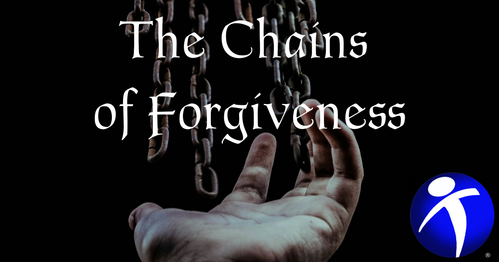
This means that any situation calling for forgiveness creates two sets of chains. These chains bind the offender and offended together, pulling them towards each other. The offender is called to leave his gift “before the altar,” knowing that he can’t even properly worship until he is “reconciled” with his brother (Matthew 5:23-24). The offended is called to “go and tell” the fault he has suffered to his brother alone (Matthew 18:15), escalating the matter to involve others only if this appeal fails (Matthew 18:16-17). Forgiveness requires the offender to seek forgiveness and render whatever fruits are worthy of repentance (cf. Matthew 3:8; Luke 3:8). It also requires the offended to seek to offer forgiveness to whatever degree is possible and to be willing to extend forgiveness if/when the offender repents (Luke 17:3-4).
Jesus’ teaching on forgiveness is intended to bring liberty to and restore fellowship between people. Unfortunately, setting it aside has resulted in many tragic pictures of people choosing chains instead of freedom. Sometimes the offended and the offender sit in chains together; the latter sits in the chains of his offense while the former sits in chains created by disobeying Jesus’ command to forgive. Sometimes only the offender sits in chains, not seeking the forgiveness that a Christian is willing to give. And, perhaps saddest of all, sometimes only the offended sits in chains, refusing to forgive “one another, even as God in Christ forgave” him or her (Ephesians 4:32).
How joyous it will be on the day of judgment when people who have forgiven each other and have been forgiven by God stand hand in hand with each other, with all the chains of their past gone and forgotten. How sad it will be though when people who sought God’s forgiveness but failed to seek it from others or extend it to others discover that chains still bind them and will do so for all eternity. Jesus once concluded a parable on forgiveness with these words:
If all these ideas are contained in the words “forgive” and “forgiveness,” what would be true of situations where forgiveness has not taken place? Before we received “redemption through His blood, the forgiveness of sins” (Ephesians 1:7), the Bible describes us as having been subject to the legal ramifications and earned “wages of sin,” namely, “death” (Romans 6:23). It also describes us over and over again as being “slaves of sin” (Romans 6:6, 16, 17-18, 20). Without forgiving and forgiveness, we find ourselves subject to the opposite realities of the beautiful pictures formed by the meanings behind those words. Instead of full pardon and a completely paid debt, we find ourselves owing a debt we cannot pay. Instead of “the glorious liberty of the children of God,” we find ourselves subject to “the bondage of corruption” (Romans 8:21). Instead of the weight of sin being removed far away, each of us must say, “my sin is always before me” (Psalm 51:3).
Jesus' command to forgive though is not quite the same as the circumstances that led to the forgiveness we received from Him. When we sin against God, neither God nor Jesus are under any obligation to forgive us. This is why translators emphasize that salvation is a “free gift” (Romans 5:15-16). It is different when we sin against each other.
On the part of a person who has done wrong against another person, not much is different. Sinning against God places us in bondage and debt before God, but so does sinning against a person. Jesus' words, “inasmuch as you did it to one of the least of these My brethren, you did it to Me” (Matthew 25:40) seem to apply to sin as much as they do to the good we either do or fail to do. In fact, many sins against God are also sins against others.
What’s different when one person sins against another is the obligation that is placed on the one who has been sinned against. Jesus’ command to forgive creates an opportunity to respond to sin with sin. Jesus’ teaching in Matthew 6 and 18 demonstrates that our forgiveness before God is directly tied to our willingness to forgive others.
This means that any situation calling for forgiveness creates two sets of chains. These chains bind the offender and offended together, pulling them towards each other. The offender is called to leave his gift “before the altar,” knowing that he can’t even properly worship until he is “reconciled” with his brother (Matthew 5:23-24). The offended is called to “go and tell” the fault he has suffered to his brother alone (Matthew 18:15), escalating the matter to involve others only if this appeal fails (Matthew 18:16-17). Forgiveness requires the offender to seek forgiveness and render whatever fruits are worthy of repentance (cf. Matthew 3:8; Luke 3:8). It also requires the offended to seek to offer forgiveness to whatever degree is possible and to be willing to extend forgiveness if/when the offender repents (Luke 17:3-4).
Jesus’ teaching on forgiveness is intended to bring liberty to and restore fellowship between people. Unfortunately, setting it aside has resulted in many tragic pictures of people choosing chains instead of freedom. Sometimes the offended and the offender sit in chains together; the latter sits in the chains of his offense while the former sits in chains created by disobeying Jesus’ command to forgive. Sometimes only the offender sits in chains, not seeking the forgiveness that a Christian is willing to give. And, perhaps saddest of all, sometimes only the offended sits in chains, refusing to forgive “one another, even as God in Christ forgave” him or her (Ephesians 4:32).
How joyous it will be on the day of judgment when people who have forgiven each other and have been forgiven by God stand hand in hand with each other, with all the chains of their past gone and forgotten. How sad it will be though when people who sought God’s forgiveness but failed to seek it from others or extend it to others discover that chains still bind them and will do so for all eternity. Jesus once concluded a parable on forgiveness with these words:
“‘Should you not also have had compassion on your fellow servant, just as I had pity on you?’ And his master was angry, and delivered him to the torturers until he should pay all that was due to him. So My heavenly Father also will do to you if each of you, from his heart, does not forgive his brother his trespasses” (Matthew 18:33-35).
-Patrick Swayne
patrick@tftw.org
patrick@tftw.org
Posted in Bible Study, Christian Living
Posted in Forgive, Forgiveness, Liberty, Freedom, Slavery, Slaves, Remission, Forgiving Others, Conflict
Posted in Forgive, Forgiveness, Liberty, Freedom, Slavery, Slaves, Remission, Forgiving Others, Conflict
Recent
The Difference Between God's Highway and Ours
September 29th, 2026
When There Is No Depth of Soil
September 25th, 2026
My Way and The Way Do Not Mix
September 11th, 2026
How To Keep Little Fires from Becoming Big Ones
September 1st, 2026
The Peace of Knowing the End from the Beginning
August 25th, 2026
Archive
2026
January
February
March
April
May
June
July
2025
January
March
April
May
June
July
September
October
November
2024
January
February
March
May